
Experienced Lawyers In Louisiana


Trucking Regulations in Louisiana
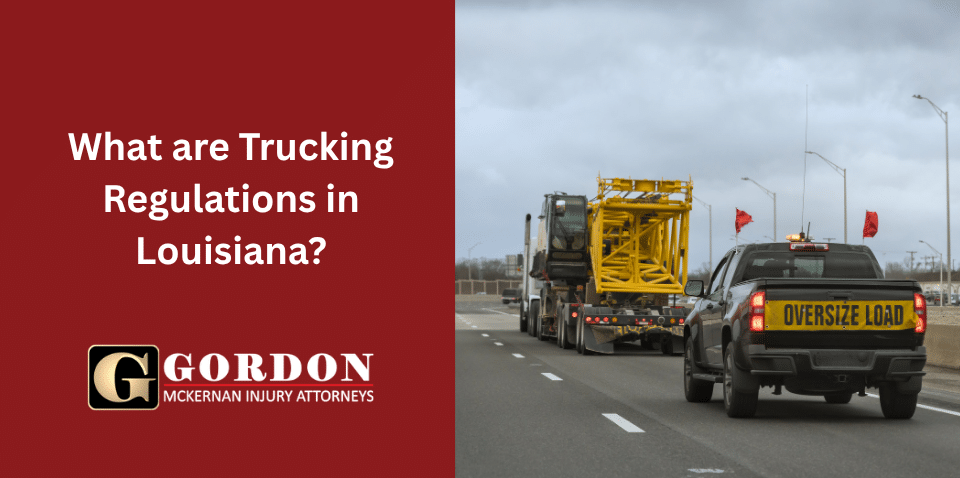
Louisiana is one of the busiest trucking states in the country. Three of the nation’s top ten ports sit within our borders. Interstates like I-10, I-12, and I-20 carry a constant stream of 18-wheelers, tankers, and flatbeds through our cities every single day. Most of those drivers follow the rules. But when one doesn’t, the results can be devastating.
Trucking regulations exist to protect everyone on the road. They set limits on how long a driver can stay behind the wheel, how much weight a truck can carry, and what kind of license a driver needs before operating a commercial vehicle. Knowing these rules matters, especially if you’ve been hurt in a commercial truck accident and want to understand whether the driver or company was operating legally.
Here’s a breakdown of the key regulations governing commercial trucks in Louisiana.
Federal Rules: What the FMCSA Requires
Most commercial trucks on Louisiana highways fall under federal authority. The Federal Motor Carrier Safety Administration (FMCSA) sets the baseline rules for any truck operating in interstate commerce.
Hours of Service (HOS)
Fatigue is one of the most dangerous conditions a truck driver can be in. To combat it, the FMCSA enforces strict hours of service rules for property-carrying drivers:
- Maximum driving time: 11 hours per shift
- On-duty window: No driving after 14 consecutive hours on duty
- Required rest: At least 10 consecutive hours off duty before the next shift
- Mandatory break: A 30-minute rest break after 8 consecutive hours of driving
- Weekly limits: No more than 60 hours on duty over 7 days, or 70 hours over 8 days
Drivers must also use Electronic Logging Devices (ELDs) to record their hours automatically. Paper logs are largely a thing of the past. ELD data is one of the first pieces of evidence attorneys look at after a crash because it shows exactly how long a driver was on the road before impact.
Commercial Driver’s License (CDL) Requirements
Before a driver ever touches an 18-wheeler on a public road, they must hold a valid CDL. The FMCSA sets federal minimums for all state CDL programs, including:
- Passing written knowledge tests and hands-on skills tests
- Completing a medical exam to confirm physical fitness
- Meeting minimum age requirements (21 for interstate driving; 18 for intrastate)
- Completing Entry-Level Driver Training (ELDT) from a registered provider
Certain hauls require extra endorsements. Transporting hazardous materials, for instance, demands additional testing and background checks.
Drug and Alcohol Testing
CDL holders face mandatory drug and alcohol testing throughout their careers. Pre-employment screening is required before hiring. Random testing continues throughout employment. And if there’s reasonable suspicion of impairment, a driver must be tested before they can operate a vehicle.
Cargo Securement
Improperly loaded freight is a serious hazard. FMCSA rules require all cargo to be secured using tie-downs, straps, and other equipment matched to the weight and type of load. An unsecured load can shift mid-trip, throw a truck off balance, or spill onto the road, putting every other driver at risk.

Louisiana-Specific Rules: What the DOTD Enforces
Federal rules set the floor. Louisiana’s Department of Transportation and Development (DOTD) adds its own layer on top.
Size and Weight Limits
Louisiana roads and bridges can only handle so much. The DOTD enforces strict limits on what commercial trucks can weigh and how large they can be:
- Maximum gross vehicle weight on interstates: 80,000 pounds
- Single axle limit: 20,000 pounds
- Tandem axle limit: 34,000 pounds
- Maximum legal width: 102 inches, not counting required safety devices
Trucks that exceed these limits must obtain oversize or overweight permits through DOTD before moving. No permit, no legal right to be on that road at that weight.
The Permit System
Louisiana uses a permit system called LaGeaux to manage oversized and overweight loads. As of September 2025, all carriers seeking annual oversize and overweight heavy equipment permits must pre-register their routes before each move. The system automatically approves routes with no restrictions. If a bridge or stretch of road can’t handle the load, the carrier finds out in advance.
This matters for injury cases. A truck that bypassed the permit process, or ran a route it was never approved for, may have been operating illegally. That’s direct evidence of negligence.
Height and Width Restrictions
Loads wider than 12 feet cannot travel on Interstate highways through major Louisiana cities, including Baton Rouge, New Orleans, Shreveport, Monroe, and Lake Charles, during peak morning or afternoon hours on weekdays. Loads over 14 feet wide face even tighter restrictions statewide. These rules protect infrastructure like overpasses, bridges, and utility lines from damage.
Weigh Stations
The DOTD’s Weights and Standards Police enforce weight laws at fixed weigh stations and through mobile patrol units. Commercial vehicles over 10,000 pounds must stop at stationary scales. Skipping a required stop carries a $500 fine for vehicles over 26,000 pounds — and that’s before any weight violation penalties are added.
The LPSC’s Role: Intrastate Carriers
Not every truck falls under FMCSA authority. The Louisiana Public Service Commission (LPSC) regulates intrastate carriers operating entirely within Louisiana’s borders. That includes carriers of household goods, certain waste haulers, and passenger transportation services. These carriers must hold valid LPSC certificates and maintain required insurance coverage to operate legally in the state.

When Regulations Get Broken, You Pay the Price
These rules aren’t just paperwork. They’re safeguards. A truck driver who pushes past legal driving hours is more likely to fall asleep at the wheel. An overloaded truck takes longer to stop and is more likely to roll over. A driver without a proper CDL endorsement may not know how to safely handle a hazardous load.
When trucking companies cut corners on compliance, ordinary Louisiana drivers bear the consequences.
If you or someone you love has been hurt in a truck accident, the regulations that were broken become some of the most powerful evidence in your case. Driver logs, ELD data, permit records, and maintenance files can all show whether the company was playing by the rules or gambling with your safety.
At Gordon McKernan Injury Attorneys, our truck accident lawyers know exactly where to look. We’ve spent decades building cases against trucking companies across Louisiana, and we know how to turn regulatory violations into the compensation our clients deserve.
There’s no fee unless we win. Get Gordon and Get It Done.
This blog post is provided for general informational purposes only and does not constitute legal advice. Laws and regulations are subject to change. For advice specific to your situation, please consult a qualified attorney.

Injured? Get a FREE Consult Now!
Let Our Team Fight For You!
If you or a loved one has been injured, don't wait— contact Gordon McKernan Injury Attorneys today for a free consultation. Our team is ready to fight for you and secure the compensation you deserve.
With over 30 years of experience, a proven track record of success, and a commitment to client care, we are the best personal injury attorneys in Louisiana to handle your case.
Call us now or fill out our online form. No Fee Unless We Win!
Your Case Matters—Let's Get It Done!
Office Locations


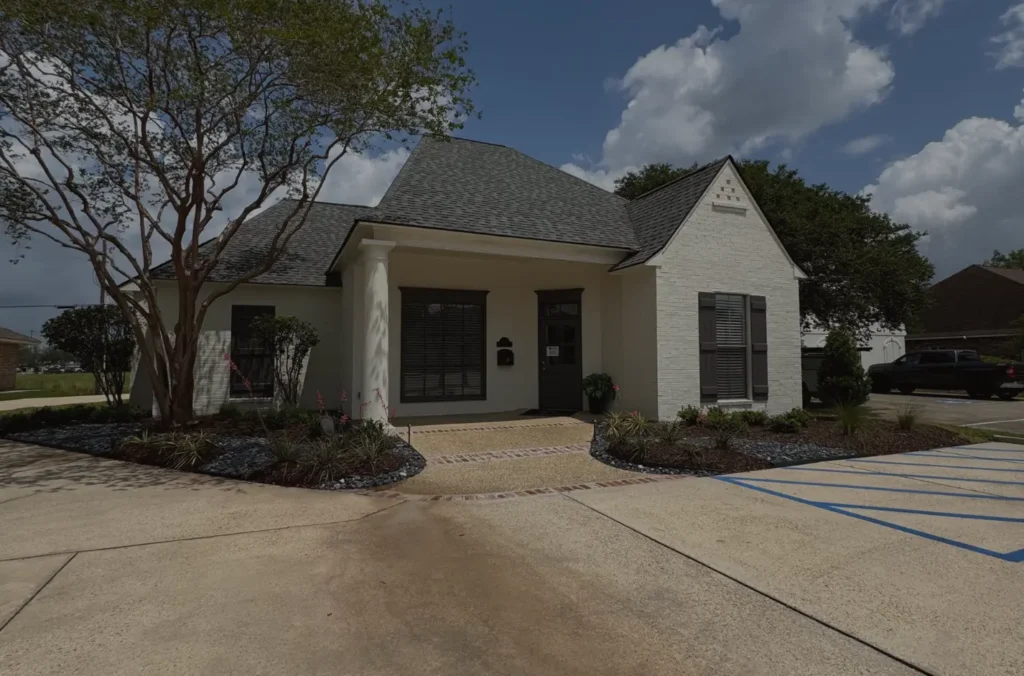
Denham Springs Office
163 Del Orleans Ave., Denham Springs, LA 70726

Gonzales Office
220 S. Burnside Ave. Gonzales, LA 70737

New Orleans Office
3900 Veterans Memorial Blvd. STE 300 Metairie, LA 70002

Zachary Office
4361 Main St. Zachary, LA 70791
© 2026 Gordon McKernan Injury Attorneys.