
Experienced Lawyers In Louisiana


Understanding Assumption of Risk in Personal Injury Cases

Many personal injury cases can look straightforward at first glance. A simple collision, such as a fender bender or a slip and fall, often seems easy to resolve. Yet these cases can become complicated once the parties start disputing what caused the accident. When that happens, the outcome often depends on which facts the court finds credible and how Louisiana’s fault laws apply.
In some cases, defendants try to argue that the injured person knowingly accepted certain dangers. This idea is known as assumption of risk. In Louisiana today, this concept no longer operates as a complete defense, but it can still affect how fault is divided and how much compensation a victim may recover.Understanding how assumption of risk fits within Louisiana’s comparative fault system is important when building a strong personal injury claim. Gordon McKernan Injury Attorneys stay up to date on the latest Louisiana Supreme Court decisions and know how assumption of risk arguments are handled in real cases. The team can guide you through these issues with clarity and confidence.
What Is Assumption of Risk?
Assumption of risk is often mentioned in personal injury cases, but in Louisiana, it no longer works as an automatic way for a defendant to avoid liability. In 2022, the Louisiana Supreme Court confirmed that the traditional common-law version of this doctrine “no longer has a place in Louisiana tort law.” Today, a person’s decision to take on certain dangers is treated as part of comparative fault, which determines how responsibility is divided between everyone involved.
The basic concept still matters. When someone knowingly and willingly engages in an activity with obvious hazards, the court may consider that choice when assigning each party’s percentage of fault. This does not erase the defendant’s negligence, but it can affect how much compensation an injured person may receive.
For example, signing a liability waiver before bungee jumping shows you understand the general risks of the activity. Even so, a company can still be responsible if an injury results from poor equipment maintenance, unsafe procedures, or operator negligence. A waiver never protects a business from accountability for preventable harm.
The same logic applies to amusement rides. Riders accept the normal risks of a roller coaster, but they do not assume the risk of defective safety restraints, improper inspections, or mechanical failures. If a seatbelt fails or the ride malfunctions, the theme park may still be liable because those dangers fall outside the risks a reasonable person agrees to take. These failures can easily lead to catastrophic injuries, which Louisiana law does not treat as risks a visitor automatically accepts.
Types of Assumption of Risk in Louisiana Personal Injury Claims
There are four basic types of assumption of risk: primary, secondary, express, and implied.
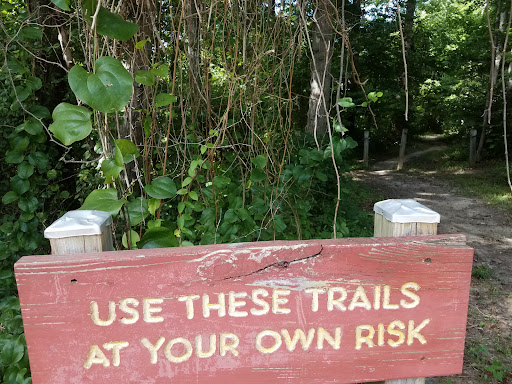
Courts and legal commentators often describe four common categories of assumption of risk. These labels remain useful for understanding how injuries happen, even though Louisiana no longer treats assumption of risk as a complete defense. In Louisiana today, these ideas feed into comparative fault rather than eliminating the defendant’s liability.
Primary assumption of risk refers to situations where a person voluntarily joins an activity with clear, inherent dangers, such as tackling in football, high-speed impacts, or the possibility of suffering a concussion during contact sports. The participant understands these built-in risks from the start. In many jurisdictions, this category can limit a defendant’s duty of care. In Louisiana, the concept simply helps the court distinguish inherent risks from negligence, but it does not erase liability.
Secondary assumption of risk involves a scenario where the defendant did owe a duty of care but the plaintiff still chose to proceed despite knowing about the danger. In Louisiana, this category does not operate as a separate legal doctrine. It is treated the same way as comparative fault, where the court allocates percentages of responsibility to each party.
Express assumption of risk arises when someone signs a waiver, release, or liability agreement before participating in an activity. These documents show that the participant accepted certain dangers. However, even with an express waiver, Louisiana courts do not allow a business to escape responsibility for negligence, unsafe conditions, or avoidable hazards.
Implied assumption of risk applies when a reasonable person would understand an activity’s general dangers and chooses to participate anyway. In Louisiana, implied assumption of risk also folds into comparative fault, meaning it may affect the percentage of damages a plaintiff can recover, but it does not completely bar a claim.
Pure Comparative Fault and the Assumption of Risk
Louisiana follows a pure comparative fault system, which means a court assigns percentages of responsibility to everyone involved in an accident. Your compensation is then adjusted based on your share of fault. This system is governed by Louisiana Civil Code Article 2323, which applies comparative fault regardless of the basis of liability.
In an assumption of risk context, Louisiana no longer treats secondary or implied assumption of risk as separate legal defenses. Instead, the court evaluates your choices under the comparative fault framework. The question becomes how much of the danger you knowingly accepted and how much resulted from the defendant’s negligence.
The important point is that you can still recover damages. Even if the defendant argues that you knowingly accepted certain risks, you may still be entitled to compensation for your injuries, including catastrophic injuries, as long as the defendant contributed to the harm. Your share of fault, and the corresponding reduction in damages, will be decided by a judge, jury, or arbitrator depending on how the case proceeds.
FAQ About Assumption of Risk in Louisiana Personal Injury Cases
Understanding how assumption of risk works in Louisiana can make a major difference in how you approach your claim. These common questions break down how courts in Baton Rouge, New Orleans, Lafayette, Shreveport, and across Louisiana apply the law today.
1. What happens if I signed a waiver before getting injured in Louisiana?
A liability waiver shows you accepted some general risks, but it does not protect a business from negligence, poor maintenance, or unsafe conditions. Louisiana courts still allow injured people to seek compensation if the defendant’s conduct contributed to the harm. A waiver reduces some exposure, but it does not eliminate accountability.
2. Can assumption of risk completely bar my claim in Louisiana?
No. The Louisiana Supreme Court has ruled that the traditional common-law doctrine no longer applies as a total defense. Courts now fold these arguments into comparative fault, which can reduce damages but cannot block recovery entirely.
3. How does comparative fault affect my compensation?
Under Article 2323, your damages are adjusted based on your percentage of fault. Even if you knowingly accepted certain risks, you can still recover compensation if the defendant was also negligent. The court assigns fault based on the evidence presented.
4. Does assumption of risk apply to minors in Louisiana?
Minors cannot fully appreciate or legally accept many risks, so courts apply assumption-of-risk concepts very narrowly. A business or property owner still owes minors a strong duty of care. Louisiana courts rarely reduce a child’s recovery based on risk acceptance alone.
5. What activities are considered inherently risky under Louisiana law?
Sports, recreational events, amusement rides, and adventure activities often involve inherent risks participants are expected to recognize. Louisiana courts distinguish these natural risks from negligence, equipment failure, or unsafe supervision. Only the inherent risks are considered in fault allocation.
6. What is the difference between express and implied assumption of risk?
Express assumption involves signing a waiver or contract acknowledging specific dangers. Implied assumption arises when a reasonable person would understand an activity’s general risks. In Louisiana, both concepts feed into comparative fault, not complete immunity for the defendant.
7. How does assumption of risk apply to offshore, industrial, or ATV accidents in Louisiana?
These environments carry obvious hazards, but companies must still follow safety protocols, conduct inspections, and maintain equipment. Courts evaluate whether an injury resulted from an inherent danger or from negligence, which cannot be waived. Comparative fault applies, but claims remain fully viable.

Injured? Get a FREE Consult Now!
Let Our Team Fight For You!
If you or a loved one has been injured, don't wait— contact Gordon McKernan Injury Attorneys today for a free consultation. Our team is ready to fight for you and secure the compensation you deserve.
With over 30 years of experience, a proven track record of success, and a commitment to client care, we are the best personal injury attorneys in Louisiana to handle your case.
Call us now or fill out our online form. No Fee Unless We Win!
Your Case Matters—Let's Get It Done!
Office Locations

Denham Springs Office
163 Del Orleans Ave., Denham Springs, LA 70726

Gonzales Office
220 S. Burnside Ave. Gonzales, LA 70737


New Orleans Office
4241 Veterans Memorial Blvd, Suite 15 Metairie, LA 70006


Zachary Office
4361 Main St. Zachary, LA 70791
© 2026 Gordon McKernan Injury Attorneys.